
The Grotto of Posilippo near Naples, Italy
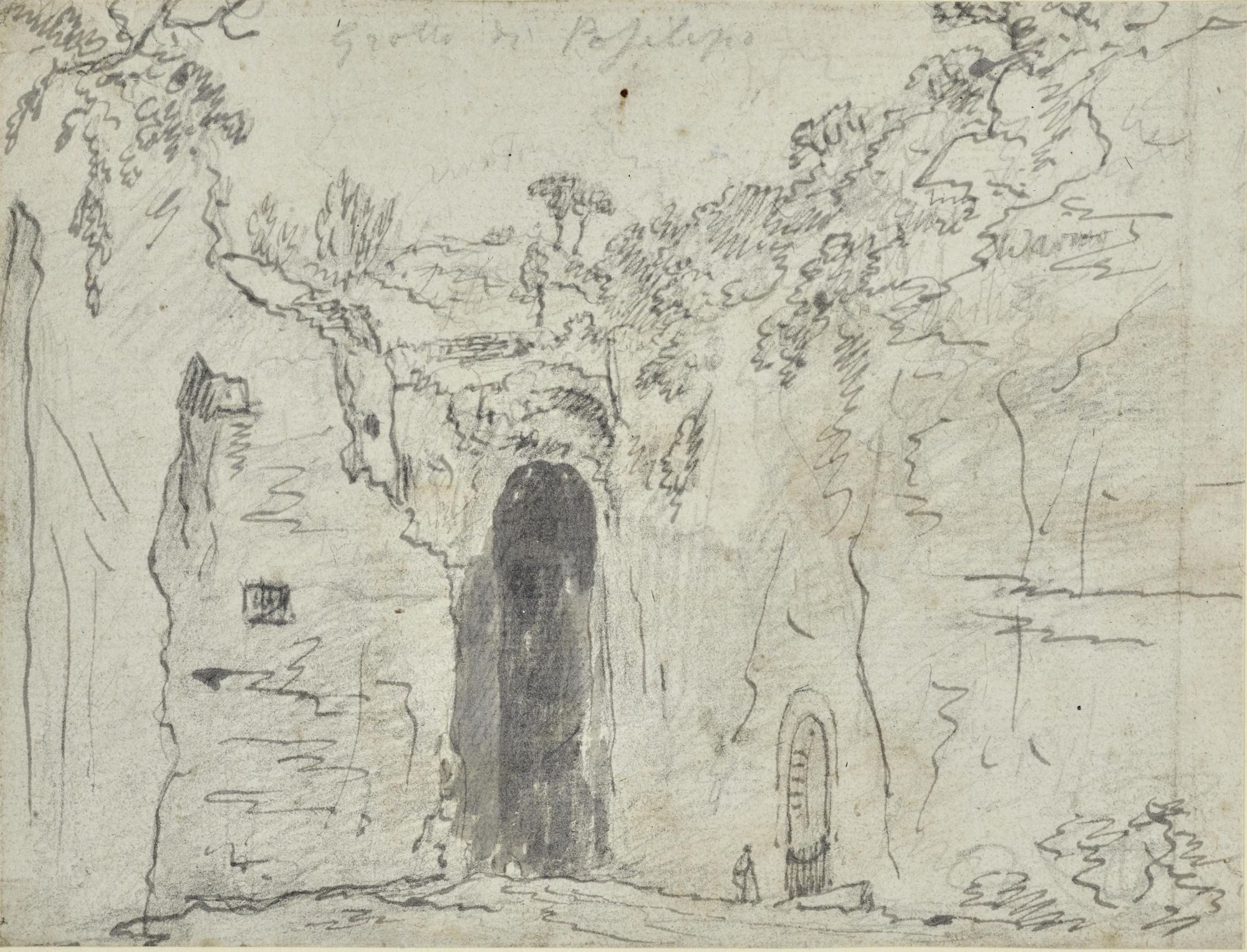
The Grotto of Posilippo near Naples, Italy
The Grotto of Posillipo near Naples, ItalyInscribed upper centre: Grotto of PosilipoPen and grey ink and wash over pencil on laid paper12.2 by 16 cm., 4 ¾ by 6 ¼ in.Provenance:Mrs Elizabeth Finch, 38 Bedford Gardens, London W8;By descent to her granddaughter;With Martyn Gregory Gallery, 2020;Russell Worby (1954-2025)Literature:Martyn Gregory, British Watercolours and Drawings, Summer 2020, no.7Born in Southwark, London, Marlow was a pupil of the topographical painter Samuel Scott before travelling to Italy in 1765. He spent time in the south of France, Rome and Naples before returning in 1768.The grotto of Posilippo was a popular subject for eighteenth century artists. It was a tunnel built in the time of the Emperor Augustus to give access from Naples to Posillipo. The entrance was also drawn in the 1770s by Thomas Jones (on loan to the National Gallery), Francis Towne (British Museum) and William Pars (Birmingham City Art Gallery) - see Francis W. Hawcroft, Travels in Italy 1776-1783, exhibition catalogue 1988, see nos.132, 134 and 135 respectively. A finished watercolour of an oxcart travelling through the grotto by Marlow is in the Yale Center for British Art, New Haven.)
William Marlow (1740-1813)
The Grotto of Posillipo near Naples, Italy
Inscribed upper centre: Grotto of Posilipo
Pen and grey ink and wash over pencil on laid paper
12.2 by 16 cm., 4 ¾ by 6 ¼ in.
Provenance:
Mrs Elizabeth Finch, 38 Bedford Gardens, London W8;
By descent to her granddaughter;
With Martyn Gregory Gallery, 2020;
Russell Worby (1954-2025)
Literature:
Martyn Gregory, British Watercolours and Drawings, Summer 2020, no.7
Born in Southwark, London, Marlow was a pupil of the topographical painter Samuel Scott before travelling to Italy in 1765. He spent time in the south of France, Rome and Naples before returning in 1768.
The grotto of Posilippo was a popular subject for eighteenth century artists. It was a tunnel built in the time of the Emperor Augustus to give access from Naples to Posillipo. The entrance was also drawn in the 1770s by Thomas Jones (on loan to the National Gallery), Francis Towne (British Museum) and William Pars (Birmingham City Art Gallery) - see Francis W. Hawcroft, Travels in Italy 1776-1783, exhibition catalogue 1988, see nos.132, 134 and 135 respectively. A finished watercolour of an oxcart travelling through the grotto by Marlow is in the Yale Center for British Art, New Haven.